Espaliered Apple Trees – Part II – The Trellis

Graphic image of an apple espalier trellis

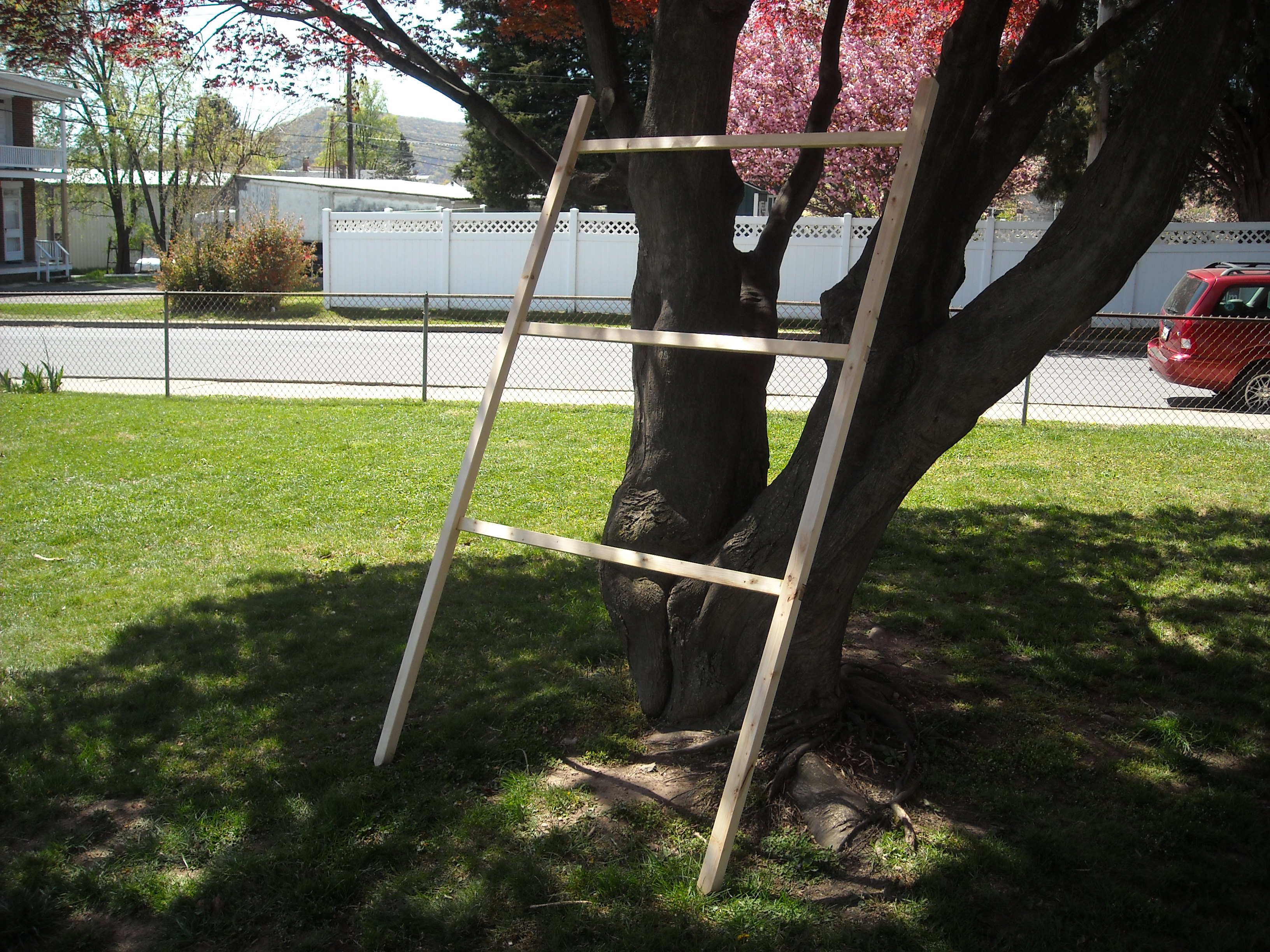
The trellis or supporting structure is the key component to espalier, it defines the espalier pattern that you’re trying to achieve. Without it, you just have a tree.

The image above shows you the basic trellis that we built, for a three-tiered cordon pattern. As you can see our trellis will be used to support 4 trees. This trellis is fairly simple to build and can be built with minimal tools. All of the supplies used to build this trellis can be purchased at any good building supply store.

Continue reading

Kelp Meal

Last weekend I was finally able to locate a store in our area that carried Kelp Meal. I am really excited to finally have the chance to use Kelp Meal in my garden. For years I have read articles about the benefits of applying Kelp Meal, but since I had a really hard time finding a store in our area that carried it, I have just never used it until now.

A bag of Kelp Meal

Continue reading

Espaliered Apple Trees – Part I

Espalier apple tree a few weeks after planting.

Ever since I started gardening years ago I always wanted to grow apple trees, but living in town on a small lot it always seemed impossible to have enough room to grow apples. Then one day my wife stumbled onto an article in a magazine about espalier and this got us thinking, maybe we can grow apple trees in our backyard.

Continue reading

Spring Garden Update: 5-18-12

We had some great weather recently and our garden is really growing. The perfect combination of warmer weather and rain, what more can you ask for?

I have already harvested some spinach and arugula from our spring planting. It is a great feeling to sit down at a meal and eat something that you grew from seeds in your own backyard. I wish more people could experience this feeling.

Close up of some lettuce plants

Continue reading

Planting For A Summer Harvest

Last weekend was our first planting for the summer harvest. It was finally time to plant outside all those plants we have been nursing along inside for these last few weeks. I allowed all the plants to harden off for a week outside before planting them in the garden.

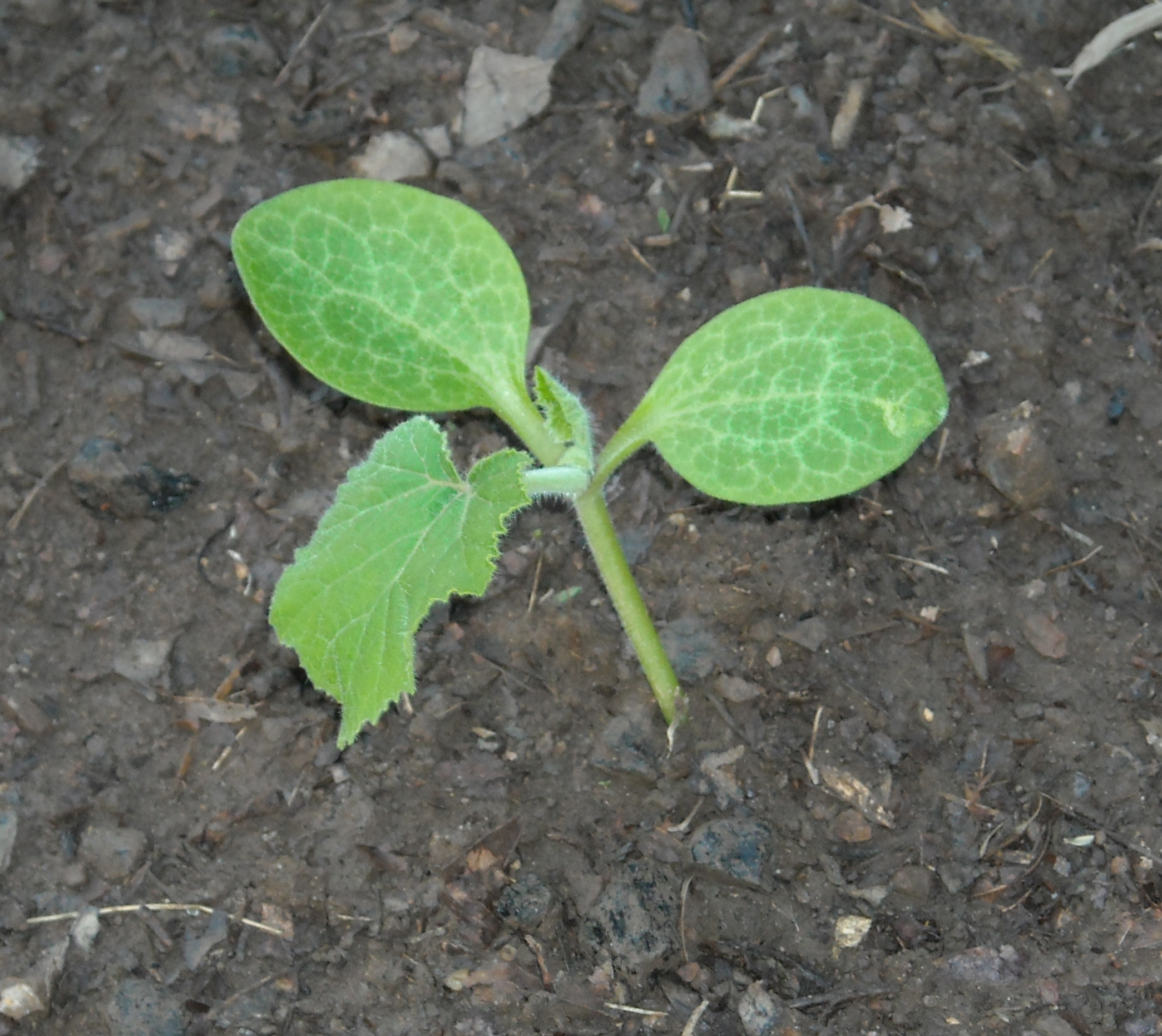
A close up of a summer squash plant.

We planted the following vegetables for our Summer Harvest:
3 Amish Paste Tomatoes
1 Hillbilly Tomato
1 Cherry Roma Tomato
1 Red Zebra Tomato
5 Homemade Pickles (pickling cucumbers)
5 Edmonson (pickling cucumbers)
3 Fish Peppers
3 Bull Nose Peppers
2 Early Prolific Straight Neck Summer Squash
2 Black Beauty Zucchini

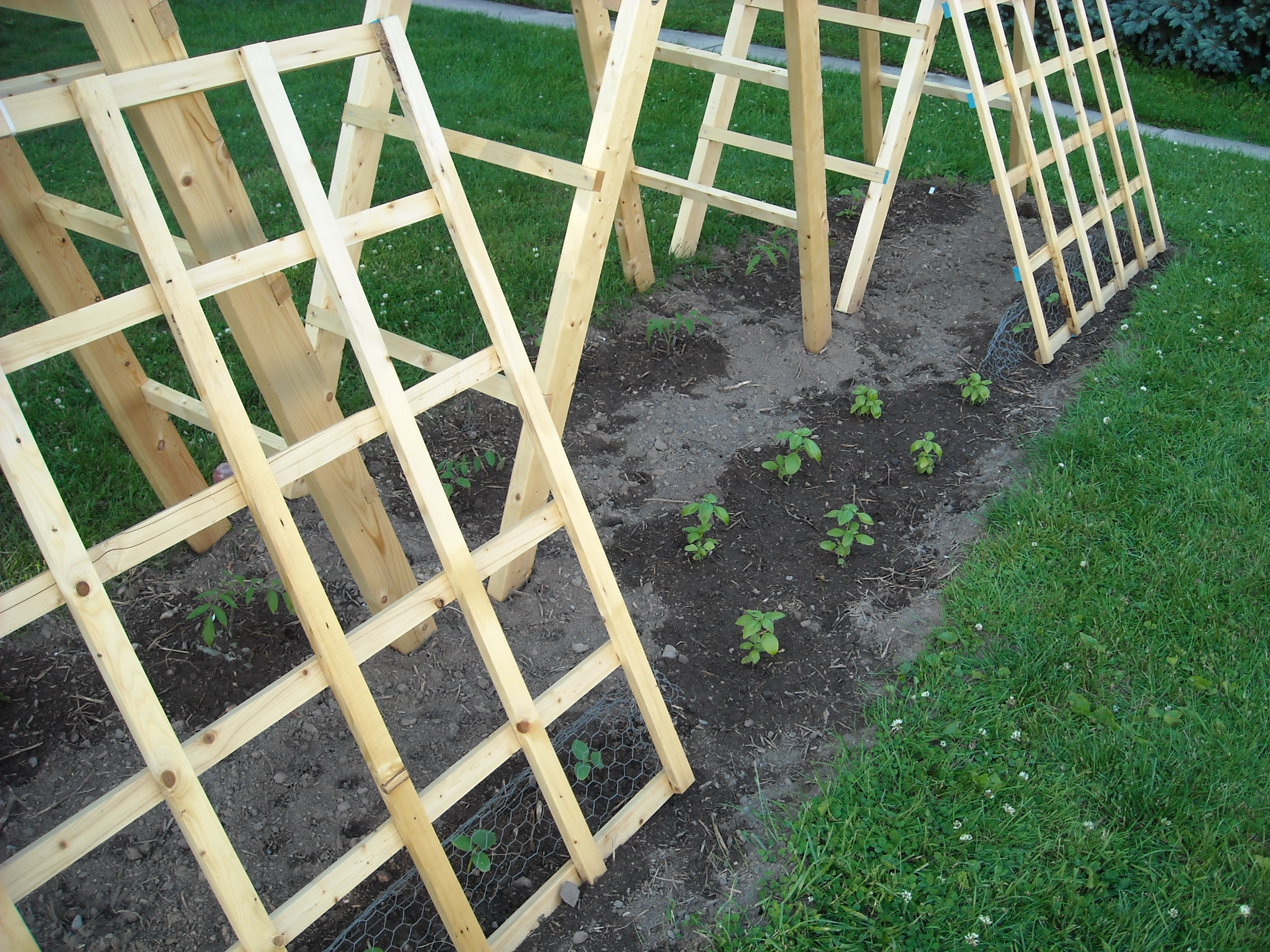
Tomatoes, Cucumbers, and Basil plants.

Tomatoes, Cucumbers, and Basil

Peppers and Squash Plants

Peppers and Squash Plants

We also planted the following herbs for our Summer Harvest:
6 Cilantro
4 Dill
4 Summer Savory
4 English Thyme
3 Genovese Basil
3 Large Leaf Italian Basil
4 Sweet Basil

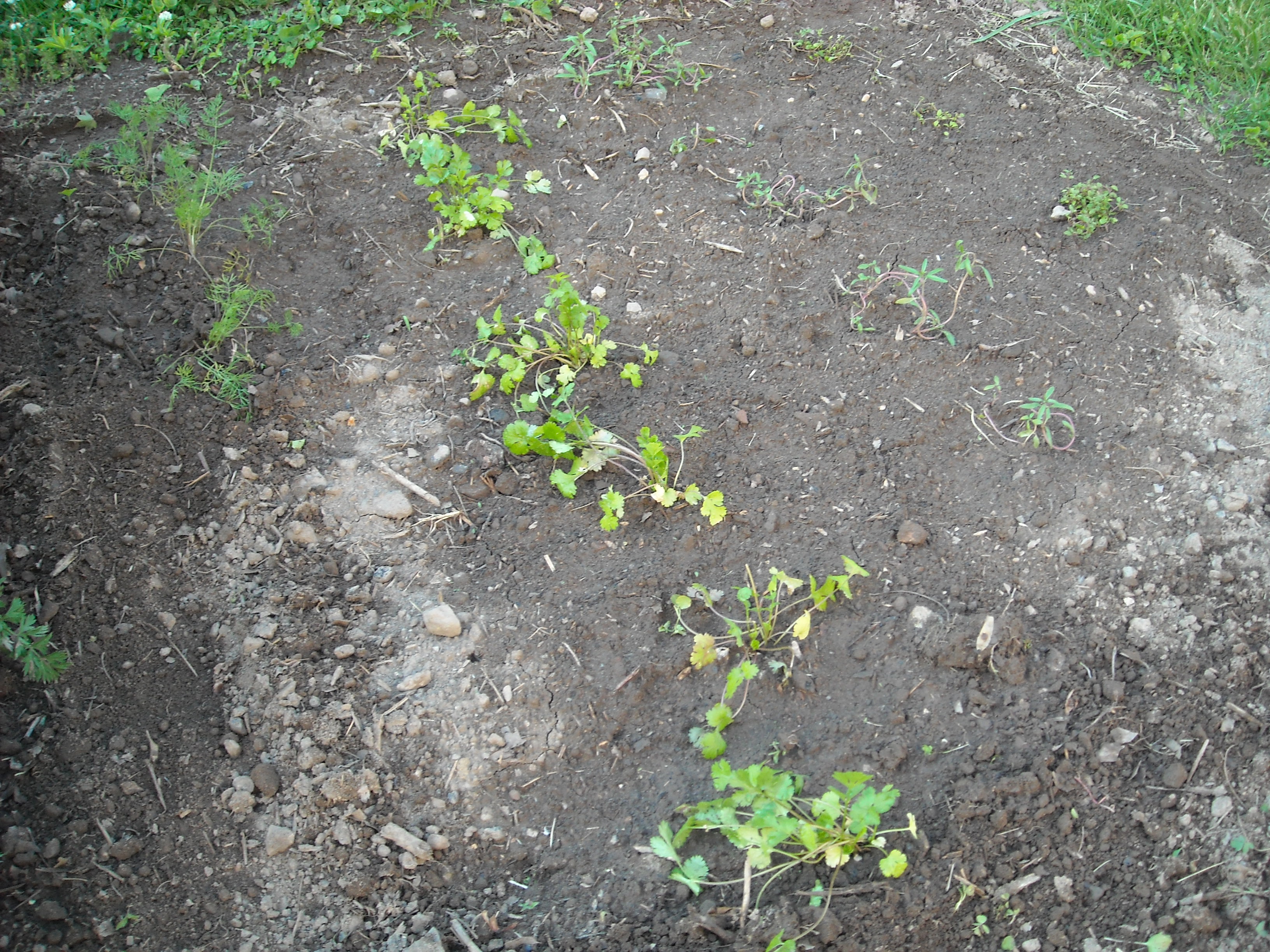
Dill, Cilantro, Summer Savory, and Thyme planted in the garden

Dill, Cilantro, Summer Savory, and Thyme

In a few months we will be enjoying a great summer harvest. I can’t wait.

Happy Growing….

Tomato Ladders and Cucumber Trellises

I have finally given up on tomato cages. Over the years I never seemed to have any luck using them. They always seemed to fall over right when the tomatoes were ready to pick. Then, in order to keep the cages up-right, I would drive several stakes into the ground, but it always seemed that no matter how many stakes I would use it was never enough. The cages always fell over with the weight of the tomatoes. I just found using them frustrating.

The solution to my frustration was to build tomato ladders. This is one of those simple projects that I have wanted to do for years, but the timing was never right until this year.

Tomato ladders with a cucumber trellises.

As you can see, these tomato ladders are not complex to build. I built these tomato ladders from some standard 2 X 4s and basic hardware. The ladders are about 6 ft. tall and 2 ft. wide. I placed three rungs on each side about 18 inches apart. I applied several coats of boiled linseed oil to the ladders to protect them from the elements.

Our plan is to grow one tomato plant up each side of the ladder, securing the plant to the rungs as it grows.

Tomato Ladders with cucumber trellises.

Because of our limited space, we decided to try growing cucumbers vertically on a trellis. It only seemed natural to use the ladders to support one end of the cucumber trellis.

The cucumber trellises were also made from 2 X 4s, I ripped down several strips that were 3/4″ thick by 1-1/2″ wide and 48″ long. I then placed the strips together to form a simple grid pattern. Like the ladders I applied several coats of boiled linseed oil to the trellises. I secured them to the ladders with several zip ties.

Tomato ladders with cucumber trellises.

I will keep you posted on the success and failures of the tomato ladders and cucumber trellises this season.

Happy growing…

Building Pea Fences

For years I have been growing a variety of sugar snap peas that can grow to a height of 6 feet. How to support these peas is the biggest challenge I face with growing them. So this year I decided to build a new support system for the peas: “the pea fences.”
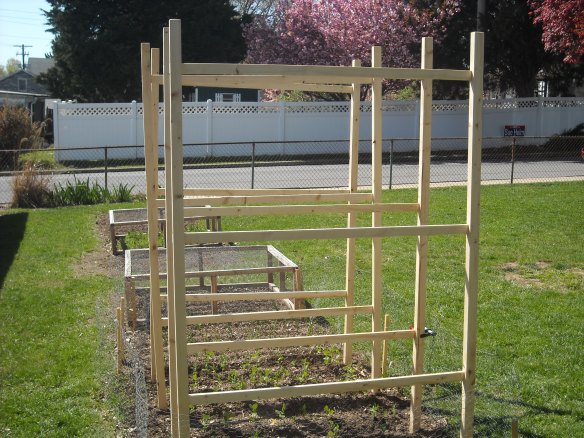
Pea fences installed in the garden.

These pea fences are made from standard construction grade 2″ X 4″ that are 8 feet long. Each fence takes about 1 and a half 2 X 4s to build.

I made enough parts to build 4 fences, so all of the images below show the quantities for 4 fences.

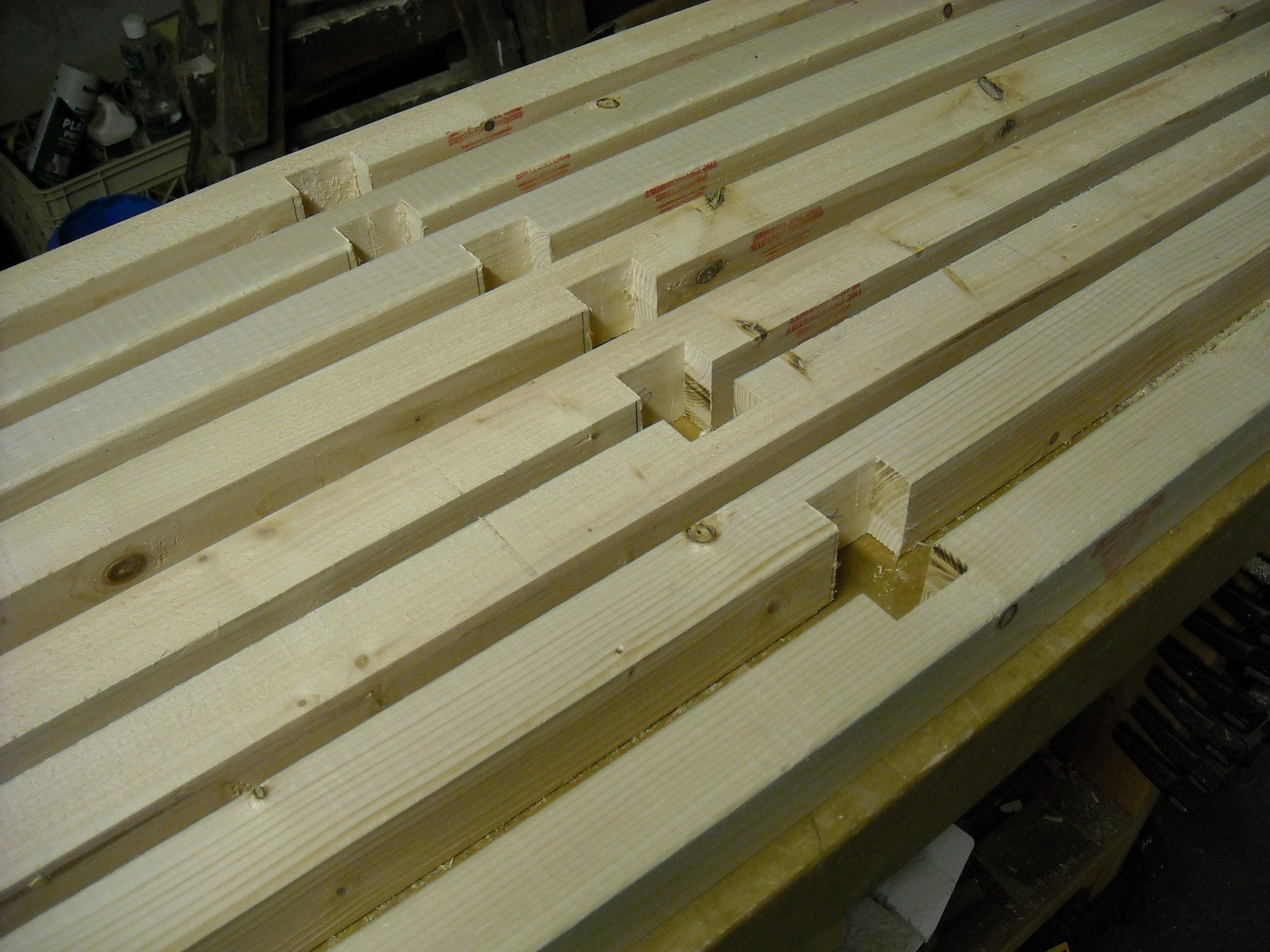
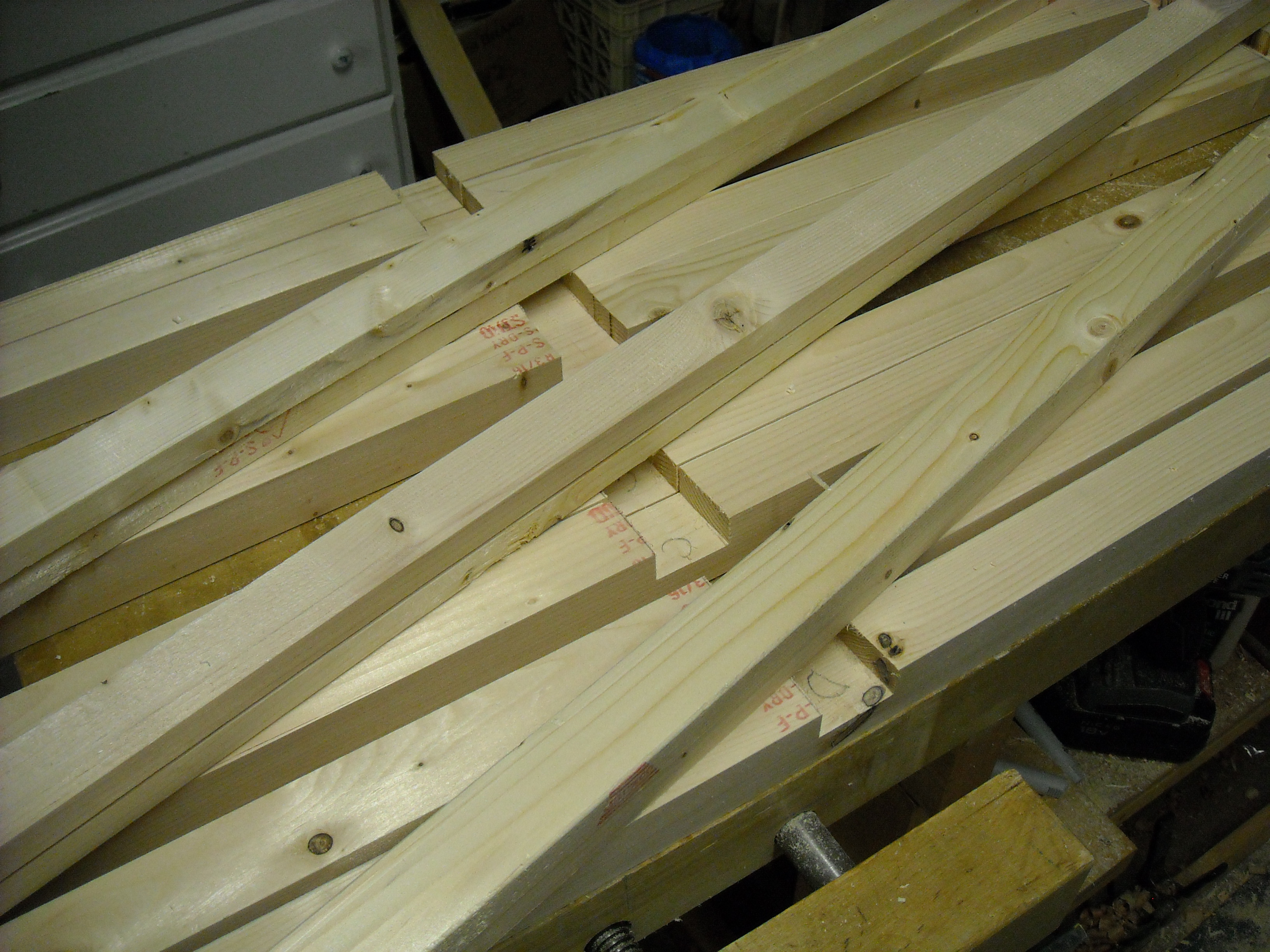
Step 1: Select four nice, straight 2 X 4s and clamp them all together. Measure in from the top end 2″ and strike a line across all the boards, this line will be the new top of the post. Next measure in 6″ from the opposite end and strike a line, this will be the new bottom of the post. Then, layout the grooves for the horizontal supports. The spacing I chose was for the first groove to be 6″ down from the top (be sure to measure from your new top line, not the top of the 2 X 4), then 24″ between the other two grooves. Each groove will need to be 1-1/2″ wide and 3/4″ deep to accept the horizontal support.
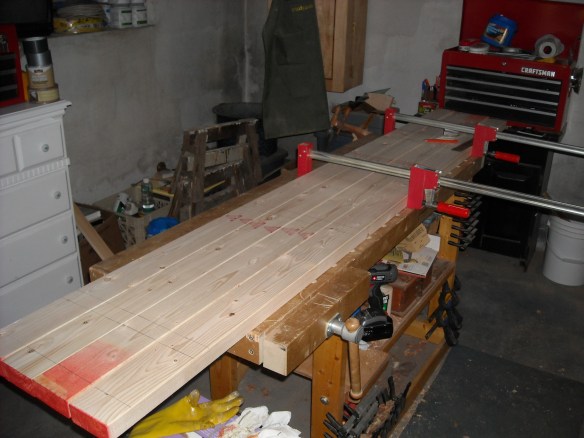
Laying out the boards for the pea fences.Step 2: With all the boards still clamped together, use a router to cut all the horizontal grooves 3/4″ deep. With the spacing I chose there were three horizontal grooves to cut.

Cutting the groove into the boards for the pea fences.Step 3: Once all the grooves are cut, then cut the ends off each post ( the 2″ and 6″ lines from Step 1). Next rip each 2 X 4 in half lengthwise, creating 2 pieces that are approximately 1 3/4″ wide.
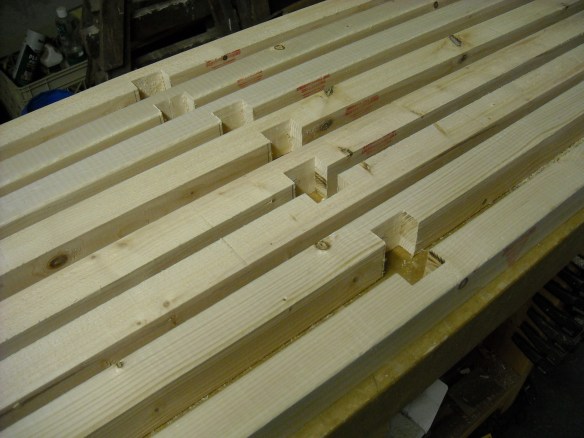
Boards ripped after the grooves are complete.Step 4: To make the horizontal supports take a new 2 X 4 and cut it to a length of 48″. From the 48″ long piece rip 4 pieces each 3/4″ thick, you will be left with a little waste. Your resulting piece should be 1-1/2″ wide, 48″ long, and 3/4″ thick. You may need to rip more 48″ long pieces, depending on the number of fences you are building.

Pea fence parts.Step 5: Then cut the ends of the posts to a sharp point, this will be the end that goes into the ground.

Post ends cut to a sharp point.Step 6:  Sand all the individual parts to the desired finish. Then, using a waterproof wood glue (Titebond 3) and clamps, assemble the horizontal supports to the vertical posts. Allow the fences to dry for 24 hours.
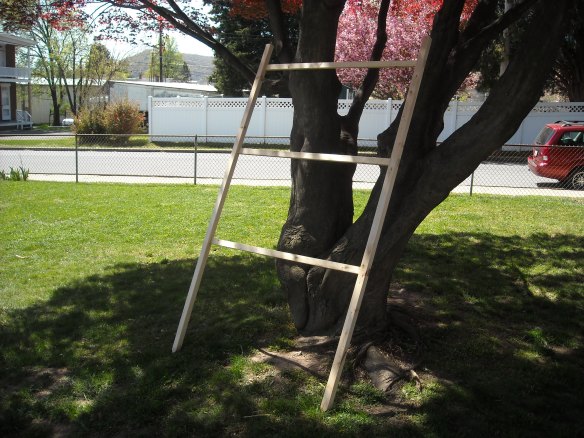
Completed pea fence.Step 7: Once each fence was assembled, I applied two coats of boiled linseed oil allowing a day drying time between coats.

Peas fences in the garden.

I placed one fence between two rows so the sugar snap peas can grow up on both sides of the fence. I will run twine between the vertical supports to help keep the sugar snap peas growing up along the fence and to give the sugar snap peas something to attach to.

Please let me know if you have any questions about building these pea fences or if you have any suggestions about supports for peas.

Happy Growing…

Transplanting Heirloom Tomatoes

Once my heirloom tomato plants start to grow their second set of true leaves, I transplant them from the small seed starting cells to larger pots.

Tomato Transplant

The transplant mixture that I use in the new pots is a combination of my standard seed starting mix and perlite. I usually mix about 4 parts seed starting mix to 1 part perlite. After the mixture is combined I wet it with water before placing it in the pots.

Transplant Mix

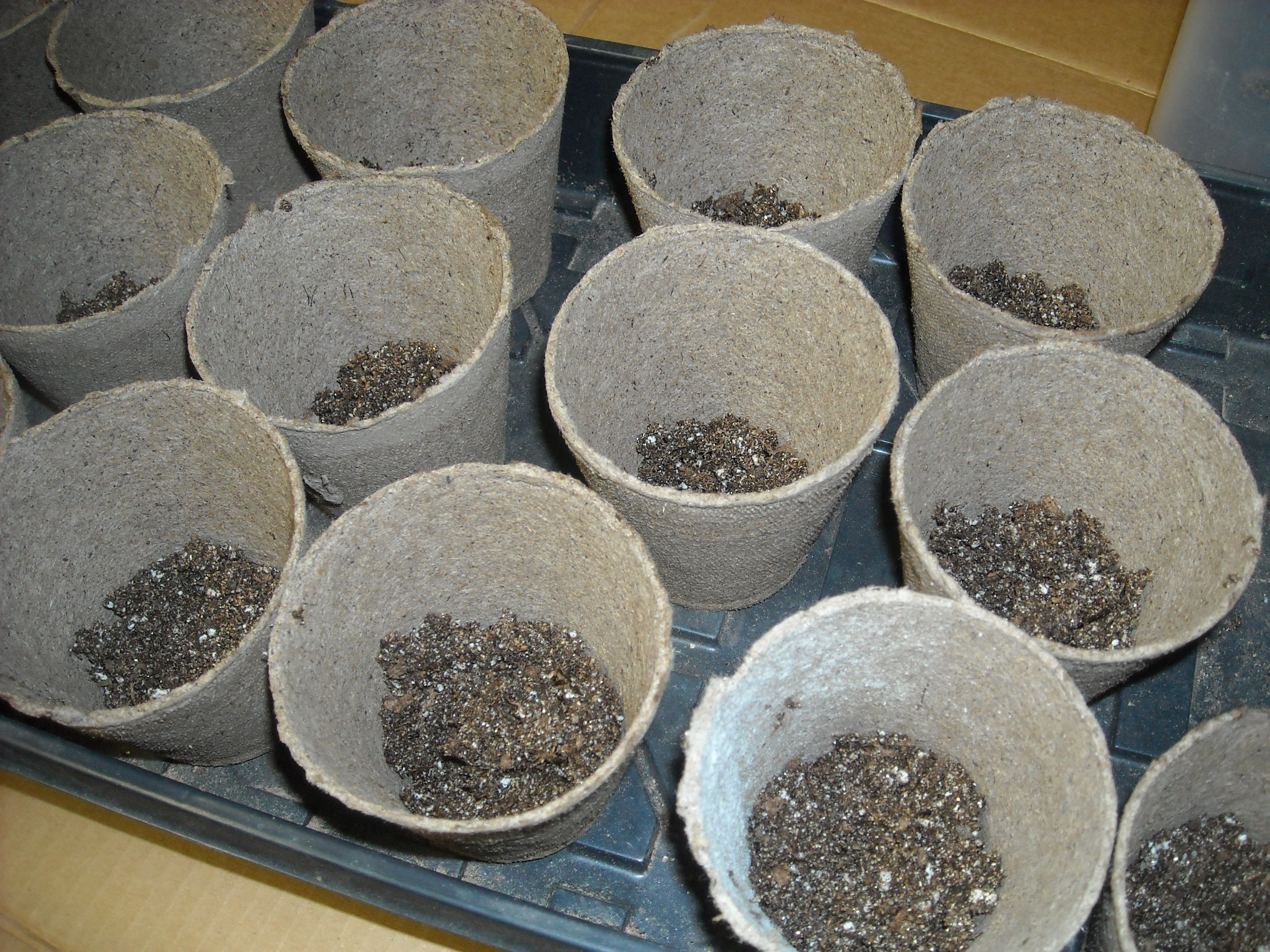
I place a little transplant mixture in the bottom of each pot. Note: make sure that whatever pot you use, there is a drainage hole in the bottom. I usually use a pot that is between 3 inches and 4 inches in diameter at the top. I have used a wide variety of pots over the years, from yogurt cups to standard green plastic pots. Recently I have been using a natural, biodegradable, and OMRI listed pot, they work really well.

Tray of transplant pots.

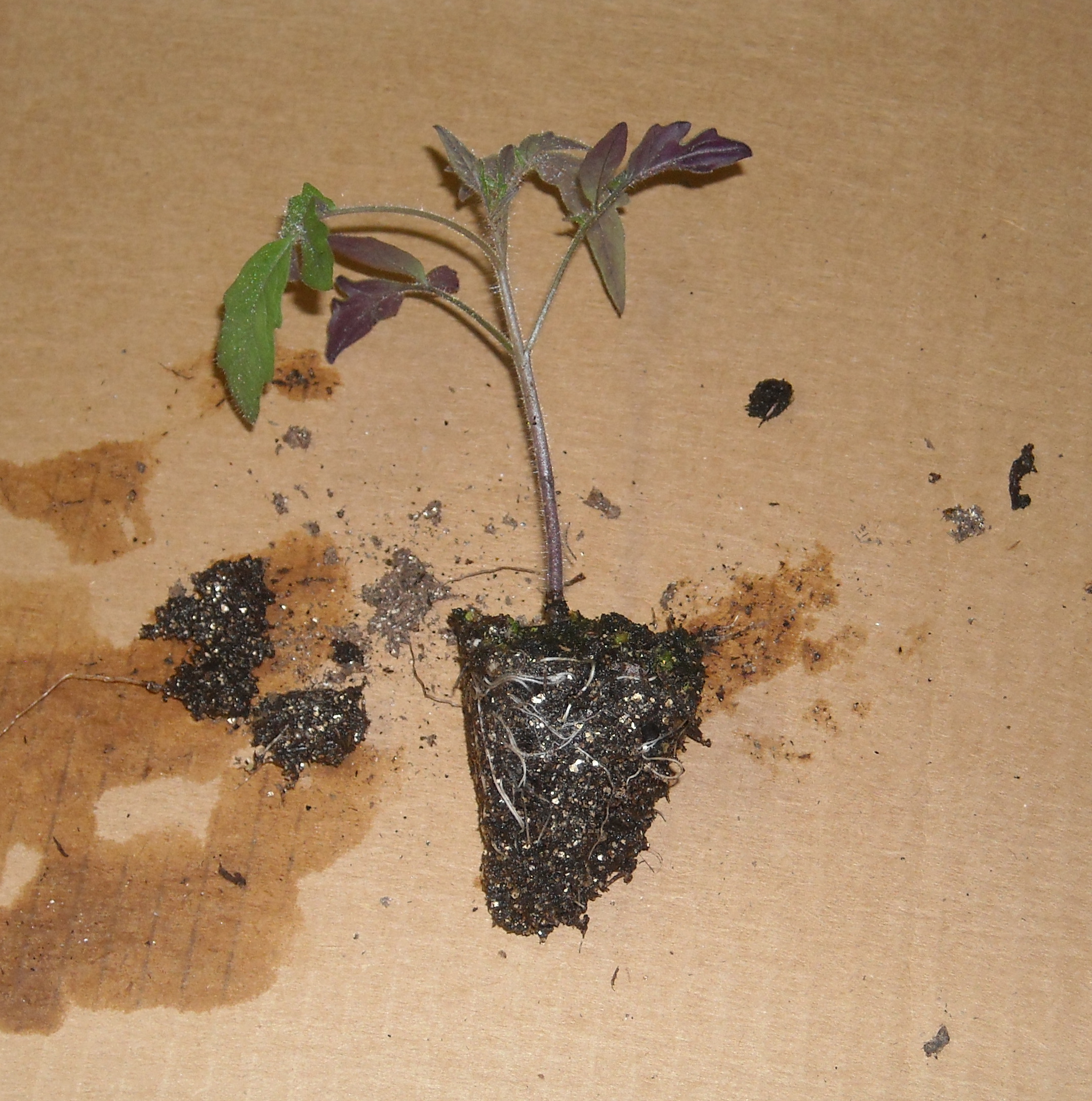
Once I remove the transplant from the seed starting cell I cut off the bottom leaves from the transplant. When I place the transplant in the new pot I make sure to bury the stem deeper then it previously was, to help encourage the development of a stronger root system. I only let the top leaves and a little of the stem stick above the mixture in the pot.

Tomato transplant with lower leaves removed.

Note: make sure to move the plant labels with the transplant so you don’t forget what was planted in the pot. I place the completed transplants back into the seed starting tray and place them under the grow lights. In a few weeks they should be ready to harden off outside.

Tray of completed tomato transplants.

Happy Growing…

Creating New Garden Plots

I finally completed my last two garden plots, now giving me a total of 4 plots to plant in.

The two new garden plots.

I created these plots the same way I have been creating plots since I first started gardening years ago. In fact, this is about the sixth time I had to cut sod to create a garden.

First I start by determining how big I want the garden plot to be and how much space I want to leave between the plots. For these plots the formula is simple: 4 ft. wide and 16 ft long with 3 ft. between all plots.

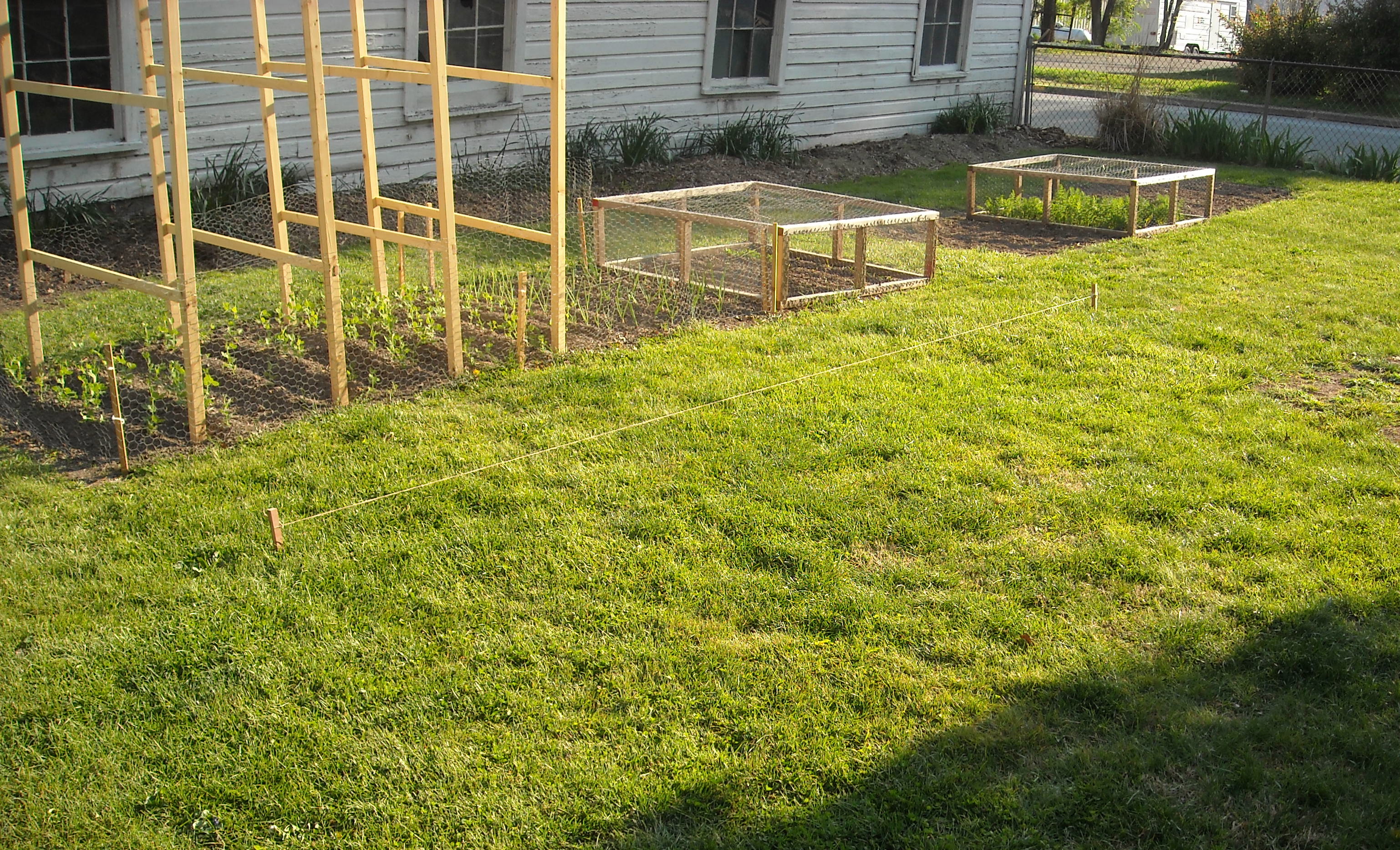
Since I wanted to place my new plot 3 ft. from my existing plot, I measured 3 ft. from the corner of the existing plot and drove a stake into the ground. Then I did the same thing at the opposite end of the existing garden plot. I ran a string between the two stakes creating what would be the edge of my new garden plot. Using an old edging tool I follow the string down the edge of the plot cutting through the sod.

Once I have complete one side, I measure out 4 ft. from each corner stake and then drove a new stake into each corner. I then connect both of those stakes with string to create the opposite edge of the plot. Like the other side, I slowly work my way down the string using the edging tool to cut the sod. When both sides are completed, I cut the sod at each end of the plot. Since these plots are only 4 ft wide I just eye up my edge and work my way across the plot.

Laying out the new garden plots.

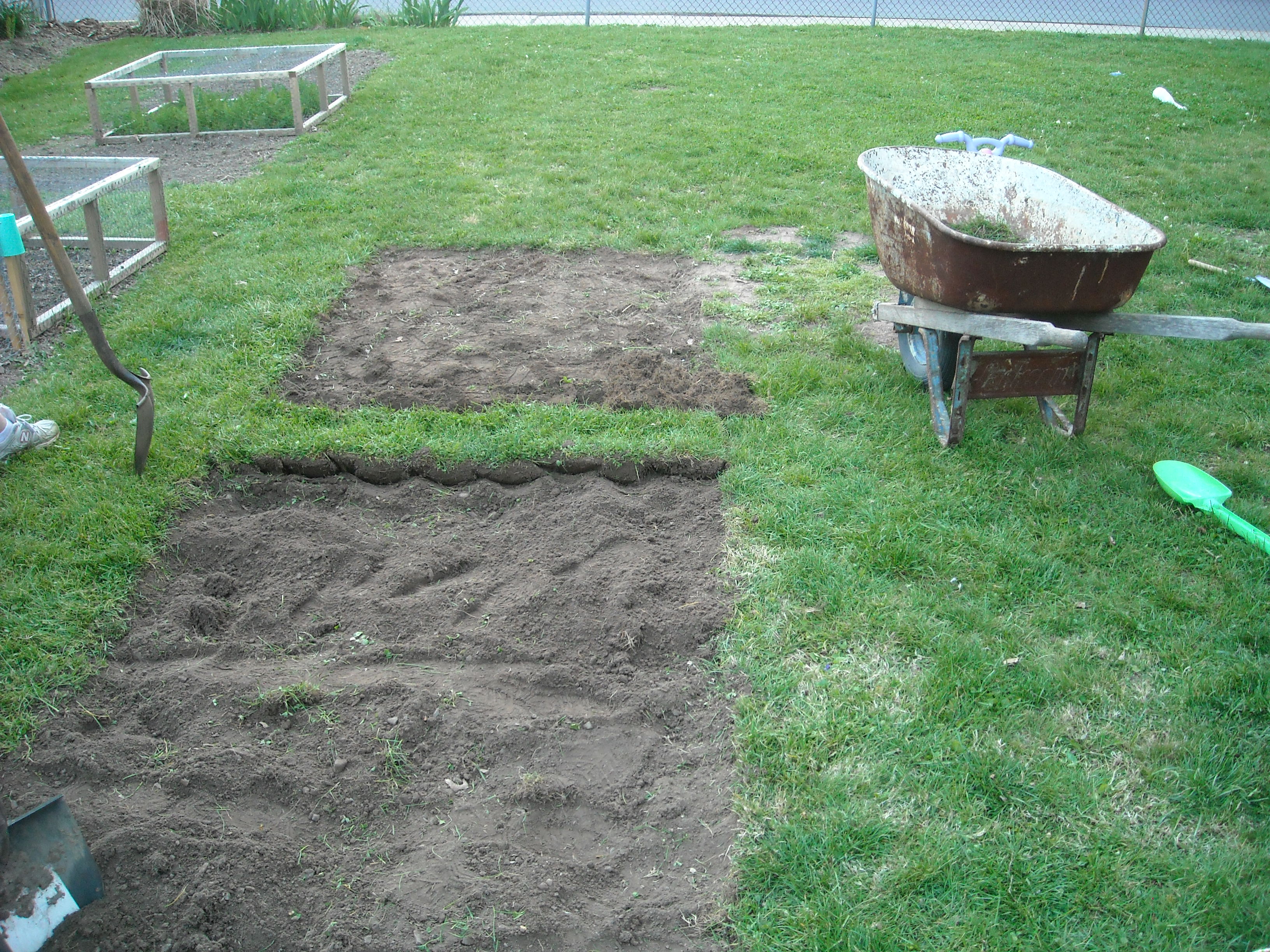
Once the perimeter of the new plot was cut I worked my way down the bed using my edging tool to cut 18 inch wide sections of sod. I then used a standard spade shovel to remove the 18 inch wide section of sod, making sure to leave as much soil in the garden as possible. I used the sod that I removed as filler around my property.

The process of creating a new garden plot.

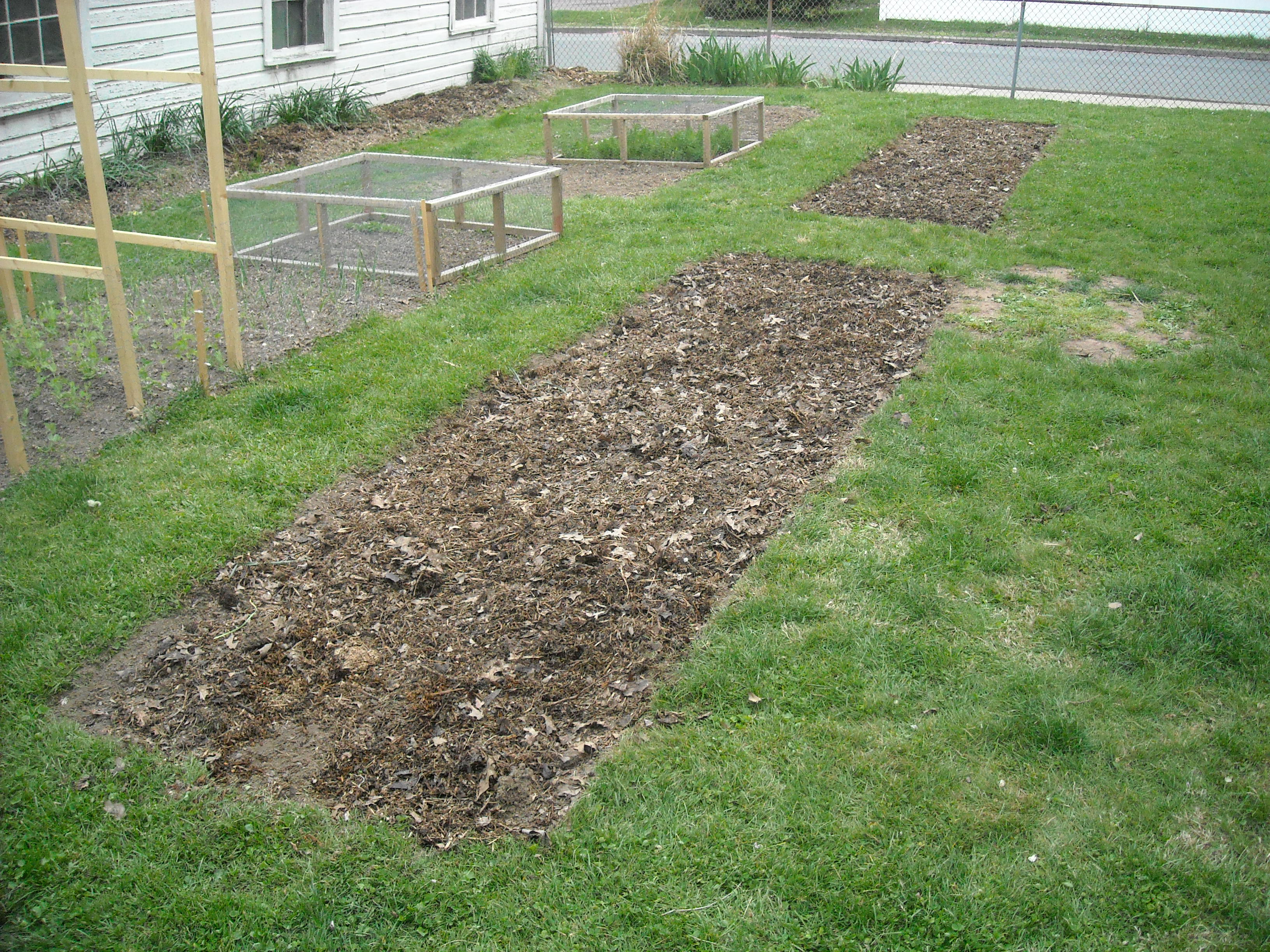
Once all the sod was removed I covered each plot with some decomposing leaves from the fall. In a few weeks I will run the rototiller through each plot, making sure the decomposing leaves are turned into the soil.

The completed two new garden plots.

Now with these two plots complete, I can focus on more growing.

Happy growing….

It’s Mr. Potato Time

It’s time to plant the potatoes. Potatoes are the only crop I do not grow at my house. I grow them across town at my grandfather’s house in a patch that we share with he and my parents. It’s really nice having a separate place to grow potatoes because of the amount of space they take up.

This year we are growing three types of potatoes; red pontiac, yukon gold, and katahdin. We have grown all three of these varieties in the past and all have produced nicely. At our local hardware/garden store we are able to buy seed potatoes by the pound. They sell them for $0.59 a lb.,which seems like a good deal compared to the prices in the seed catalogs.

Seed PotatoesBefore we started planting we ran the rototiller through the garden to turn over the soil.

The potato patch before the planting

The potato patch before the planting.

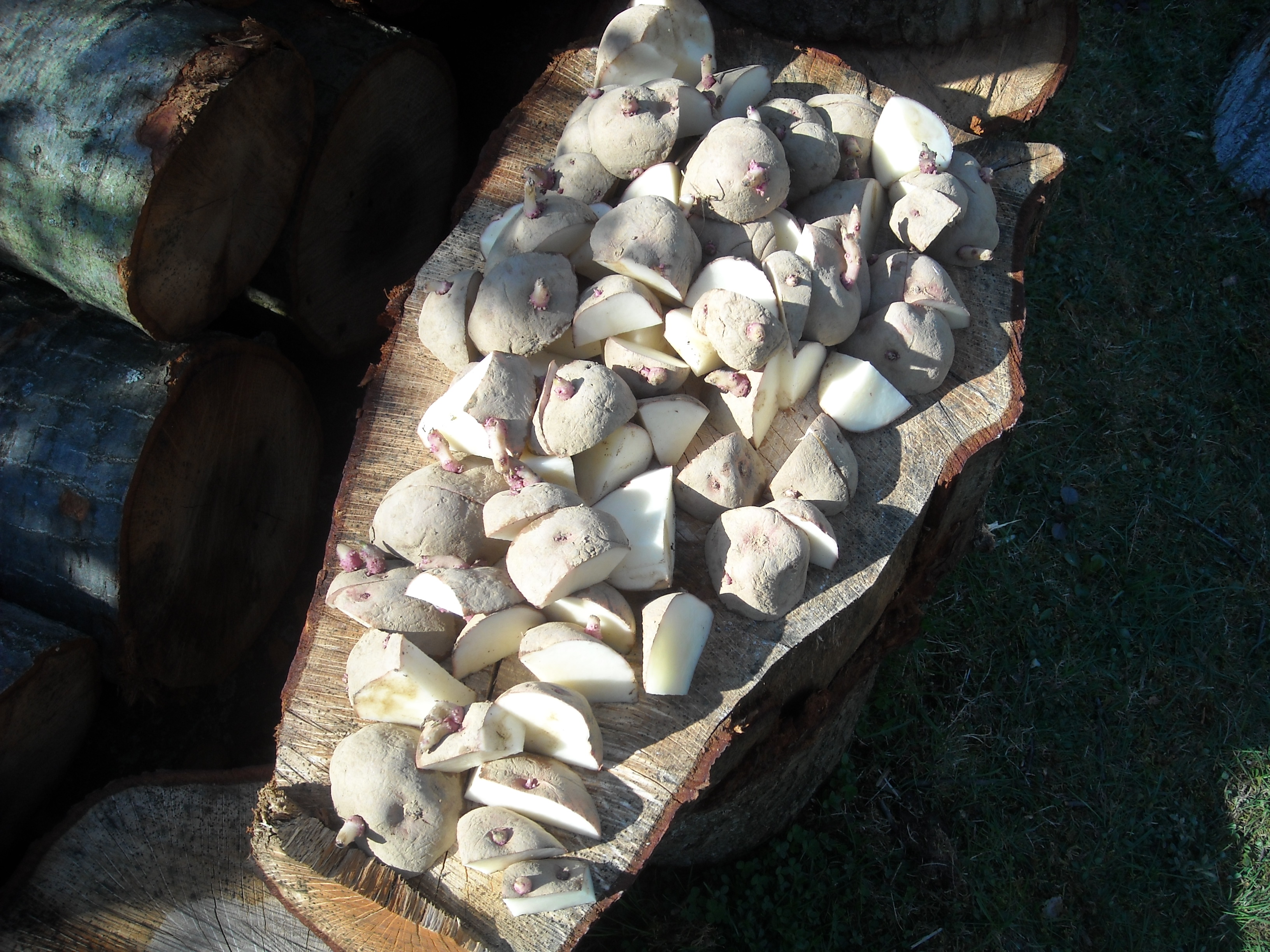
We do not plant our seed potatoes whole, we usually cut them into pieces making sure we have at least one or two eyes on each piece.

Cut seed potatoes

Cut seed potatoes.

We used one of the wheel paths created by the rototiller to plant potatoes in. Each piece of potato is placed in the row with the eyes facing up. We spaced the potatoes about 24 inches apart down the row and spaced each row about 30 to 36 inches apart. This should give the potatoes adequate room to grow.

A row of planted potatoes

A row of planted potatoes.

Once the row was planted we came back down the row raking soil back over the potatoes creating a mound. As the potatoes begin to grow we will go back down the row pulling more soil over the potatoes, making sure that the entire time the potatoes are growing they are covered up. Keeping the potatoes covered helps ensure that they are not exposed to light, which causes the outer layer of the potato to turn green.

A row of potatoes planted and covered.

A row of potatoes planted and covered.

The completed potato patch.

The completed potato patch.

The potatoes are planted.

Happy growing…